Effervescence in the Heat: A Champagne Strategy for St. Barth’s Saltiest, Spiciest Plates
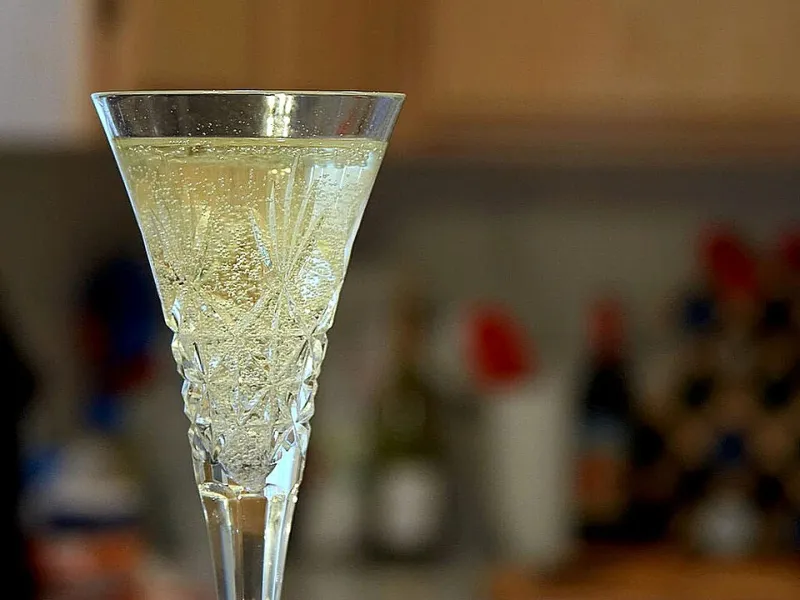
Photo: Jon Sullivan, Public domain, via Wikimedia Commons
Champagne arrives in St. Barth the way linen jackets and sunset sails do: as a matter of course. It is the aperitif before the first tasting, the toast between courses, and the nightcap after the last plate has been cleared. Yet the wine that flatters a cool Parisian dining room does not automatically flatter a Caribbean afternoon. Heat accelerates the wine’s evolution in the glass, salt sharpens its acidity, and chili can flatten its delicacy. For guests attending the 2026 St. Barth Gourmet Festival, the difference between a pleasant glass and a memorable pairing lies in choosing, serving, and sequencing with the island’s conditions in mind.
Why Tropical Service Changes the Wine in the Glass
The first variable is temperature. Champagne served too cold loses its aromatics; served too warm, it turns coarse and advances quickly toward oxidation. In a tropical setting, the window between those states is narrow. A practical target at the table is roughly 46 to 50 degrees Fahrenheit for younger, high-acid styles, and slightly warmer for older or richer bottlings. At a beachfront pavilion or an open-air tasting, that means asking for the bottle to be kept in an ice bath rather than left on a sunlit table, and pouring smaller quantities more frequently.
Glassware matters nearly as much. A narrow flute preserves effervescence but concentrates little aroma, which is a disadvantage when the plate before you is built on lime zest, cilantro, and scotch bonnet. A white-wine glass or a tulip-shaped Champagne glass gives the wine room to breathe and directs its perfume toward the nose. Several festival venues have moved toward the latter in recent years, and guests should not hesitate to request it. The wine will seem fresher, more precise, and better able to stand up to salt and spice.
Reading the Label: Dosage, Crus, and the Grower Question
Dosage—the sugar added after disgorgement—is the most useful guide for tropical pairing. Brut Nature and Extra Brut styles, with little or no added sugar, tend to work best with raw seafood, citrus, and saline dishes. Their dryness keeps the palate refreshed between bites. Brut, the most common category, occupies a flexible middle ground and can handle richer preparations such as lobster with butter or poultry with a reduced sauce. Demi-sec and sweeter styles have their place, but they are better suited to fruit desserts or foie gras than to chili-laced fish.
The second consideration is origin. Grand marque houses offer consistency and recognizable luxury, and they remain an excellent choice for a celebratory aperitif. But the festival’s more adventurous plates often reward grower Champagne—bottlings from small estates that farm their own grapes and vinify with a distinct point of view. Grower wines from the Côte des Blancs, dominated by Chardonnay, bring chalky tension and citrus precision that flatter just-caught fish. Pinot Noir–led wines from the Montagne de Reims offer breadth and red-fruit notes that can bridge dishes with tamarind, caramelized plantain, or grilled meat. A grower bottle may lack the instant recognition of a famous label, but at the table it frequently delivers a more articulate match.
Pairing by Plate: Brine, Citrus, Chili, Char
St. Barth’s culinary vocabulary is built on contrast: the sweetness of tropical fruit against the salinity of the sea, the fire of chili against the coolness of lime. Champagne can meet those contrasts if it is chosen with intention.
For raw fish, ceviche, and oysters, look for Blanc de Blancs with low dosage. The wine’s acidity should be firm but not aggressive, and its texture should echo the dish’s clean finish. Avoid heavily oaked or very old bottles here; they can overwhelm delicacy.
For dishes with lime, chili, and herbs, a Brut Nature or Extra Brut Champagne with a strong Chardonnay backbone is often the safest choice. The effervescence scrubs the palate, while the wine’s lees-derived richness prevents the chili from dominating. Rosé Champagne, particularly a crisp, low-dosage example, can also work well with grilled seafood and tomato-based preparations.
For richer plates—lobster, crab, butter-poached fish, or pork with a sweet glaze—a Brut with a touch of dosage and a Pinot Noir emphasis provides the weight and generosity the food requires. The goal is not to match sweetness with sweetness, but to ensure the wine has enough body to avoid being overshadowed.
A Practical Festival Strategy
Guests navigating multiple tastings in a single day should treat Champagne as part of the meal’s architecture rather than a constant accompaniment. Begin with a precise, low-dosage Blanc de Blancs as an aperitif. Move to a fuller Brut or a Pinot-led cuvée as the plates grow richer. Save rosé for grilled courses and aromatic spices, and reserve any sweeter style for the final dessert course.
Ask the sommelier or festival pourer about disgorgement dates when available. A recently disgorged bottle will feel fresher and more vibrant in the heat, while a bottle disgorged several years ago may show more complexity but less energy. Neither is inherently better; the choice depends on the dish and the moment.
Finally, resist the urge to treat every glass as a toast. Champagne is a wine, and in St. Barth it is also a tool for navigating salt, spice, and sun. Chosen with care and served with attention, it can do more than celebrate the festival—it can explain it, one plate at a time.