The Last Mile Is an Ocean: How Truffles, Uni, and Heirloom Produce Actually Reach St. Barth
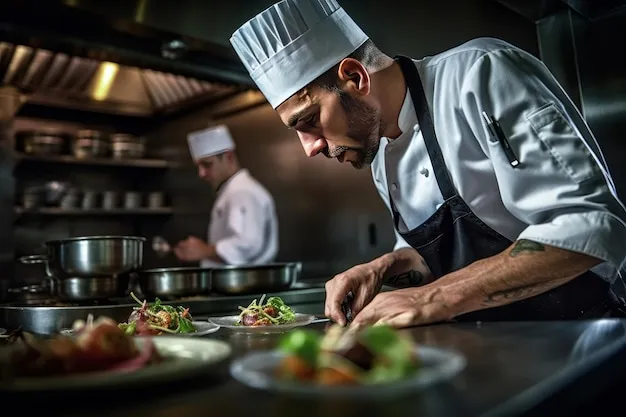
Photo: chef inspecting fresh truffles in professional restaurant kitchen, via img.freepik.com
On the Tuesday before a headline festival dinner, a chef in Gustavia will unwrap a crate that began its journey four days earlier in the hills of Alba. Inside, nestled in paper and chilled to a steady 3°C, sit perhaps two kilos of white truffle. The crate has crossed the Atlantic, cleared formalities, and been transferred twice between aircraft. It has also, in all likelihood, cost more to move than the average diner spends on a bottle of Champagne — and it is only one of a dozen such shipments arriving on the island that week.
For all the romance the festival trades in, the defining skill of a St. Barth kitchen in November is not saucing or plating. It is logistics.
The Clock Starts Long Before the Order
Peak season on St. Barth coincides precisely with the moment when the Northern Hemisphere's most fragile luxury ingredients are at their most scarce. Alba's white truffles are a matter of weeks. Japanese uni is subject to sea temperature and quota. European heirloom tomatoes, grown in hothouses or imported from the Southern Hemisphere, are competing with the island's own modest market gardens.
"You do not order a truffle," says one festival chef who has cooked on the island for more than a decade. "You reserve a harvest window, and then you hope the weather agrees with the farmer."
Purveyors in Paris, Tokyo, and Miami describe a similar rhythm: orders for the festival period are typically placed six to ten weeks out, with a firm commitment on volume two weeks before departure. From that point, the ingredient is no longer a product. It is a booking.
Three Routes, Three Sets of Rules
The geography of St. Barth is unforgiving. There is no long-haul cargo apron at Gustaf III, and no direct freighter service from Europe or Asia. Everything arrives through a hub, and every hub imposes its own constraints.
From Europe, the favored path runs through Paris to St. Maarten, then onward by a short-hop turboprop or, for heavier consignments, by ferry to Gustavia. A secondary route via Guadeloupe suits certain French suppliers and offers more cargo capacity, at the cost of an additional transfer.
From Japan, uni and certain specialty fish generally travel via Paris rather than through the United States, a routing that adds hours but avoids the complications of a third customs jurisdiction. The product is packed in seawater-soaked trays and held at 0°C to 2°C — colder than the truffles, warmer than frozen, and unforgiving of any gap in the chain.
From the U.S. mainland, Miami and San Juan serve as the principal gateways, with chilled freight consolidated onto scheduled regional flights. A chef in New York can, in theory, have product on the island within 24 hours; in practice, the calendar and the aircraft's weight-and-balance sheet have the final word.
"The small aircraft are the real bottleneck," says a customs broker who handles perishables into the Northern Caribbean. "A Twin Otter does not care that you have a dinner for eighty. It cares about pounds and the weather over the ridge."
Customs: The Part Nobody Photographs
St. Barth sits outside the European Union's customs and VAT territory, which means that goods arriving from France or elsewhere in Europe are treated, for customs purposes, as imports. Each consignment requires an entry, and animal-origin products — uni, cheese, certain charcuterie — carry additional veterinary documentation and health certification.
Brokers describe a process that is manageable when anticipated and catastrophic when improvised. Experienced importers file paperwork while the goods are still airborne, pre-alert the relevant authorities, and build in a buffer of several hours for inspection.
"The chef who calls on Thursday for a Friday delivery is not a client," the broker says. "He is a cautionary tale."
A Cold Chain Is Not One Temperature
One of the more persistent myths of fine dining is that everything delicate simply travels "cold." In reality, the festival's shipments are sorted by set point as carefully as a wine list is sorted by region.
White and black truffles travel at 2°C to 4°C, wrapped individually in paper to prevent condensation. Uni demands near-freezing temperatures and absolute stillness. Heirloom tomatoes, counterintuitively, must never drop below 10°C; chill injury turns a $12 tomato into mealy pulp within a day. Live shellfish and certain crustaceans travel damp and cool, but never submerged in fresh water.
This is why tomatoes and truffles rarely share a box. It is also why a single mis-set thermostat can ruin a shipment worth more than a modest car — and why festival kitchens increasingly rely on data loggers that record temperature every few minutes from farm to pass.
When the Plane Does Not Come
Weather in the Eastern Caribbean is not a variable; it is a permanent condition. A swell that closes the ferry from St. Maarten, a squall that delays the afternoon shuttle, a mechanical issue in San Juan: any one of these can strip a menu of its centerpiece by 4 p.m.
The best festival chefs plan for failure as a matter of routine. Menus are constructed with two or three movable components. A backup protein — often spiny lobster, mahogany snapper, or whatever the island's fishermen have landed that morning — sits quietly in the walk-in. Sauces are built to accept substitution.
"The island feeds you if you let it," says a Gustavia chef known for his relationships with local boats. "When the plane is late, we go to the fish market and change the menu. The guests never know, and honestly, sometimes the plate is better."
That local safety net is not merely a fallback. St. Barth's growers and fishermen provide a genuine counterweight to imported luxury — a reminder that a perfectly ripe tomato from a terrace garden in Lorient can carry as much weight on a plate as a shaving of Alba truffle.
What It Costs, and What It Is Worth
Freight, brokerage, insurance, and spoilage together can add 15 to 30 percent to the landed cost of premium ingredients during peak season — and considerably more for small, urgent shipments. A kilo of white truffle at wholesale may double by the time it reaches a St. Barth kitchen. A case of heirloom tomatoes can cost more to fly than to buy.
Yet the calculus is not purely financial. For the chefs who build their reputations on this week, the ability to serve a truffle at its aromatic peak or an uni that still tastes of the sea is the entire point of the exercise. The freight bill is simply the price of authenticity.
Which is why the most revealing moment of the festival may not happen in the dining room at all. It happens at seven in the morning, in a service corridor, when a chef opens a crate, lifts a tomato to the light, and decides — in that instant — whether the evening's menu will go as written or be rewritten entirely. That decision, made thousands of miles from the farm and a few hundred feet from the sea, is what St. Barth is really serving.